Selected work
From a neural simulation
to a form grown in living mycelium.

A photophobic fungus. A low-power laser. A neural model that learned how living tissue spreads. Together they print designed forms — in a living organism, with no ink and no contact.
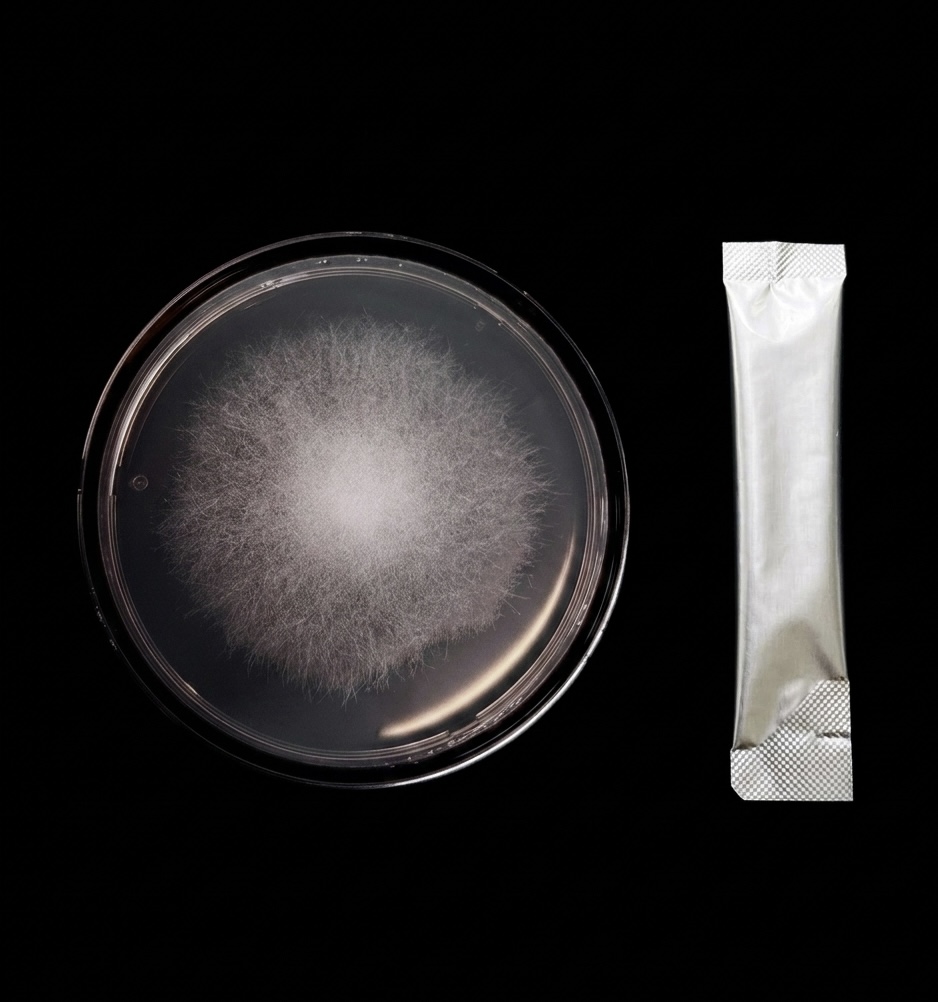
Mycelian Micro is a living-image project. The medium is not paint or pixels — it is Mucor, a fast-growing fungus that recoils from light.
We give it a boundary made of light, and it grows the rest itself. Every piece is drawn by a machine and finished by an organism — a collaboration between an engineered system and a living one.
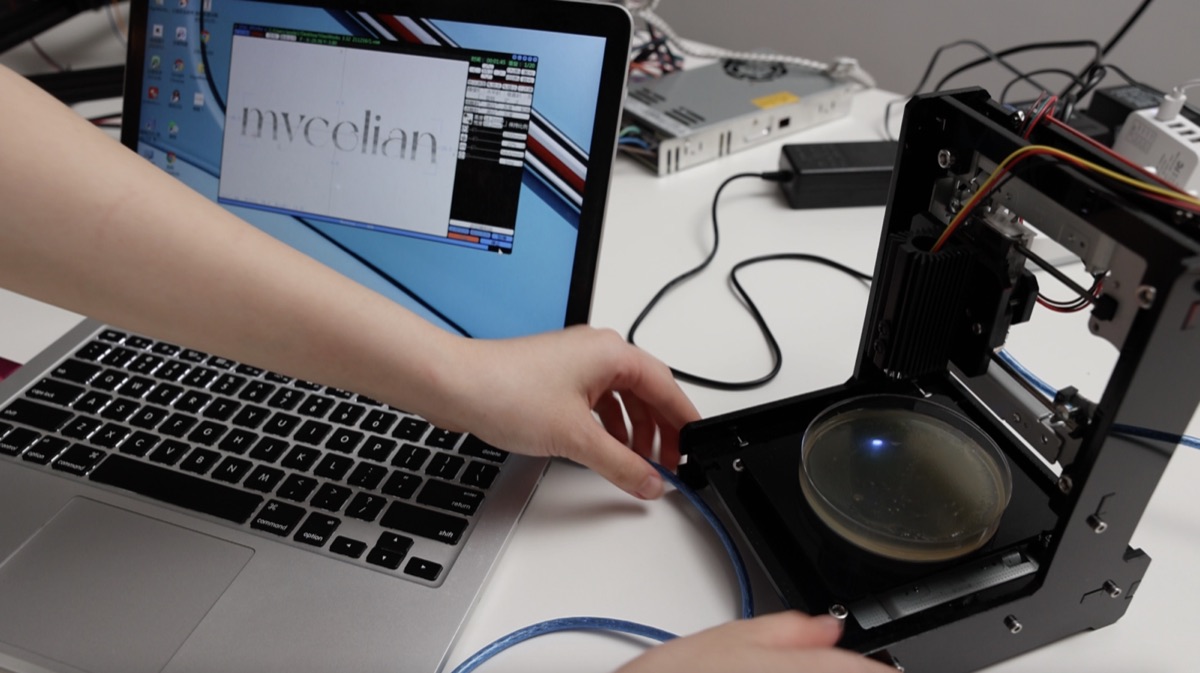
Mucor oligosporus is strongly photophobic — it retreats from light at the cellular level. A low-power 405 nm laser scans continuously across an agar plate, tracing the boundary of a target shape. Wherever the beam lands, growth is inhibited; wherever it does not, the fungus is free to expand. Over hours, the mycelium fills every unlit region and stops cleanly at every lit edge — printing the design in living tissue.
Time-lapse frames of real Mucor are segmented moment by moment, tracking the branching white network as it spreads across the agar.
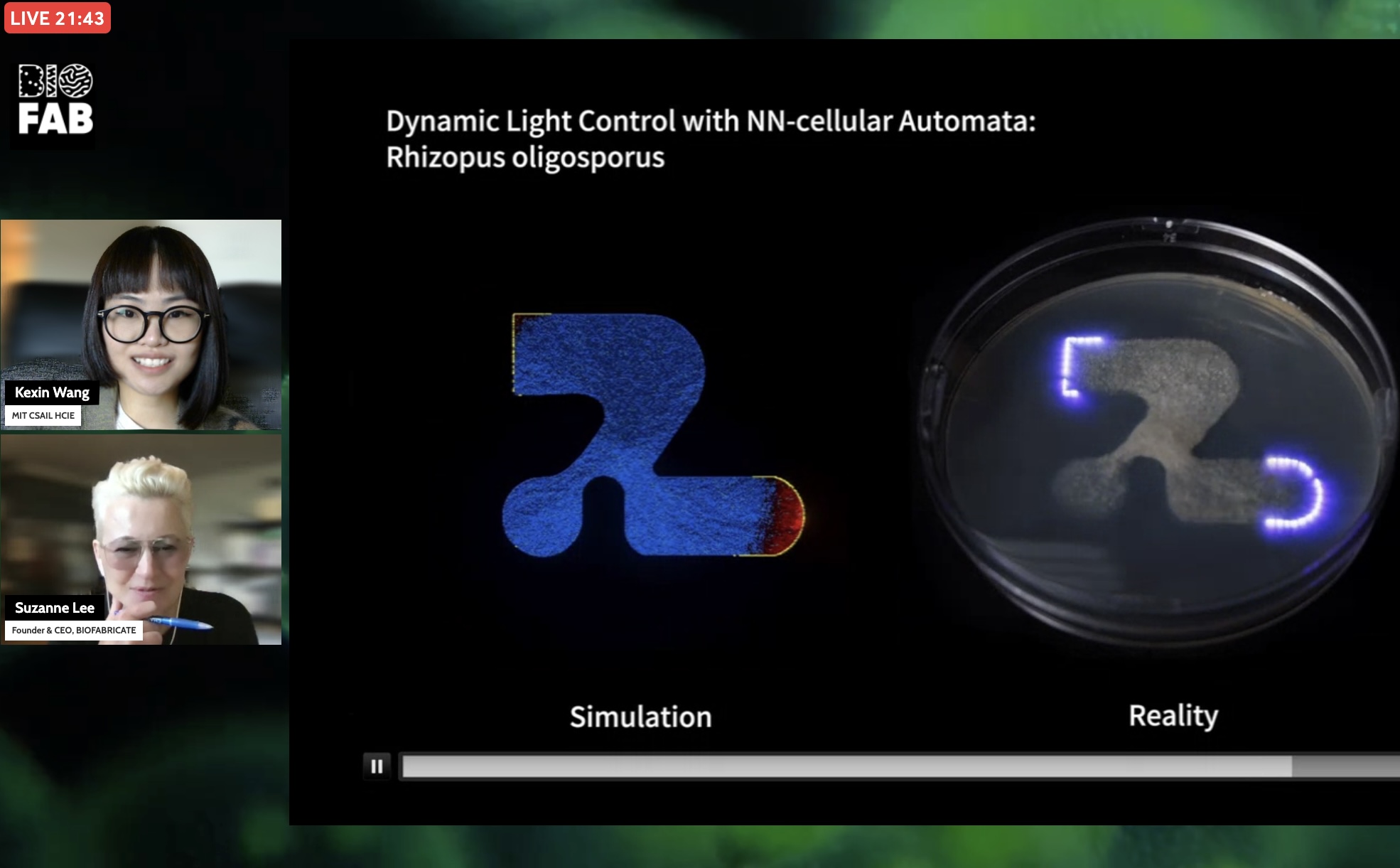
A neural cellular automaton — a grid of cells learning local spreading rules — reproduces Mucor's morphology with no hand-coded biology.
A moving laser boundary guides real growth into the designed shape. Simulation and organism converge on the same form.





“A deeper question than making a picture: it is about interacting with a living system — how an organism responds to, moves with, and is guided by light over time.”
We are bringing time-lapse capture directly into the control platform — monitoring a print as it grows and building a cinematic record automatically. Alongside it, a compact motorized gimbal rig designed specifically for filming fungal prints: preset angles, smooth moves, repeatable shots.
The method began with Mucor; we are now testing it on other species, and studying how light shapes fungal behavior — not only its visual form — as organisms respond to and are guided by light over time.
Out of that research, a prototype installation: use light to interact with living fungus in real time. Part game, part experiment, part art — a new kind of interface to a living medium.
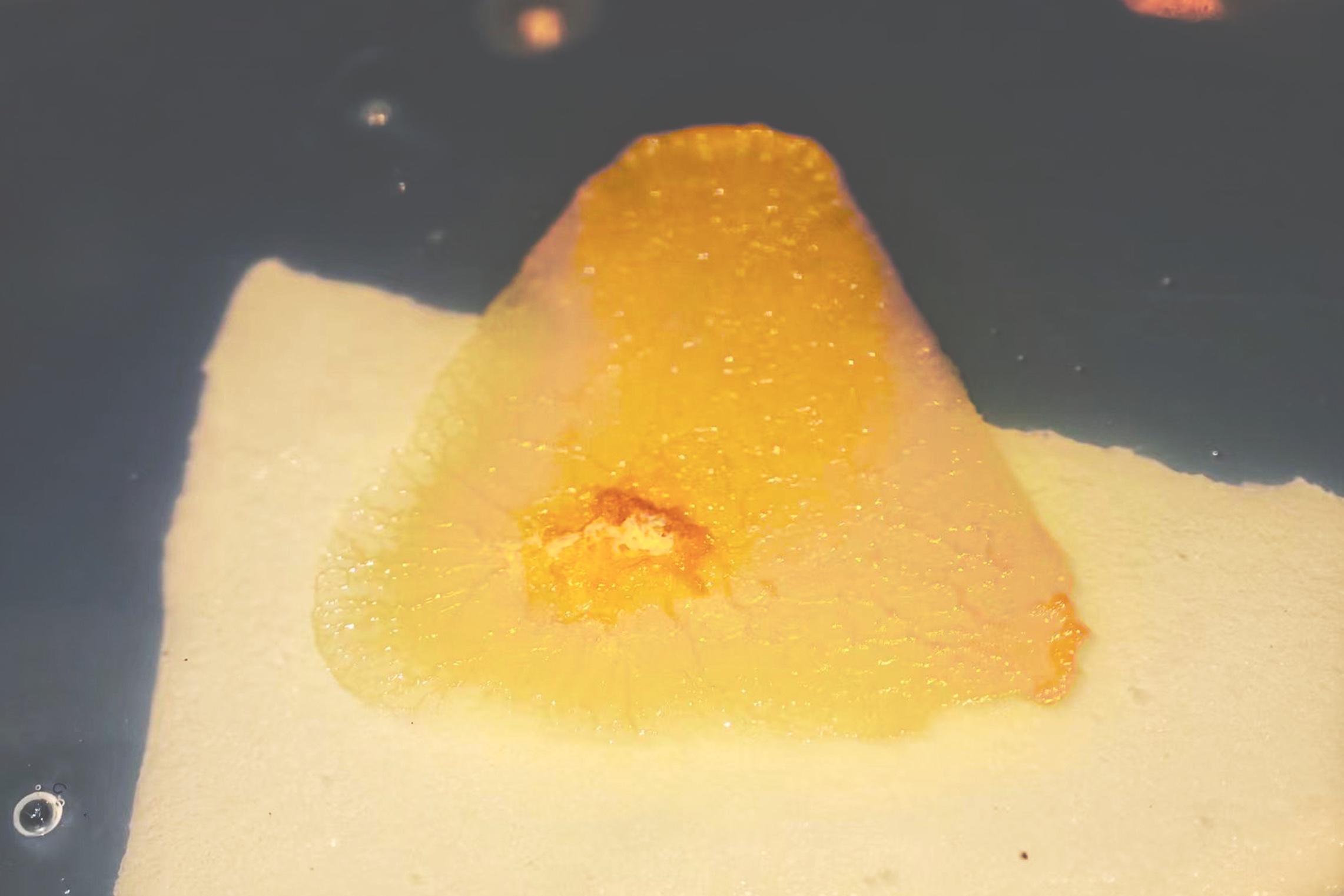
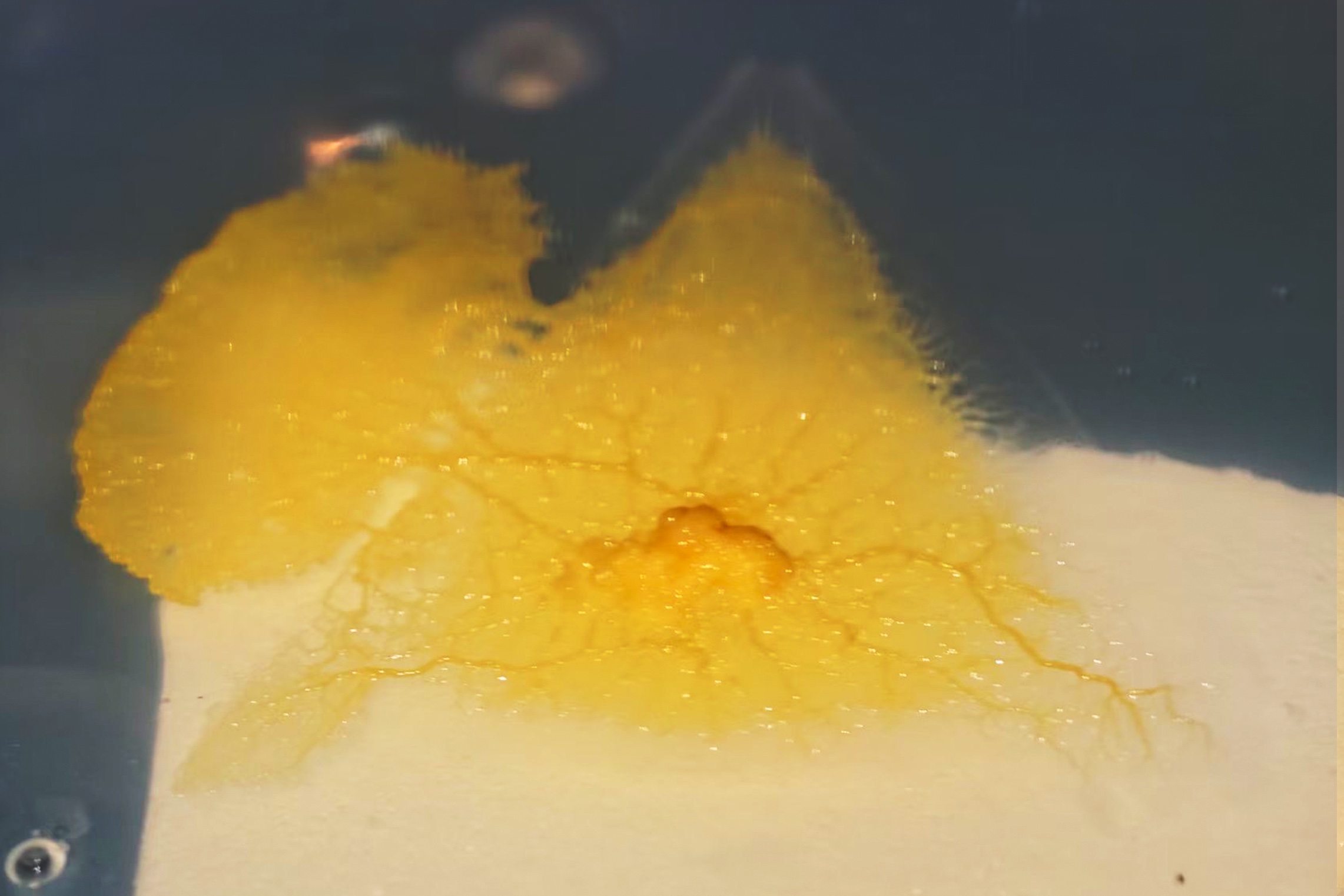
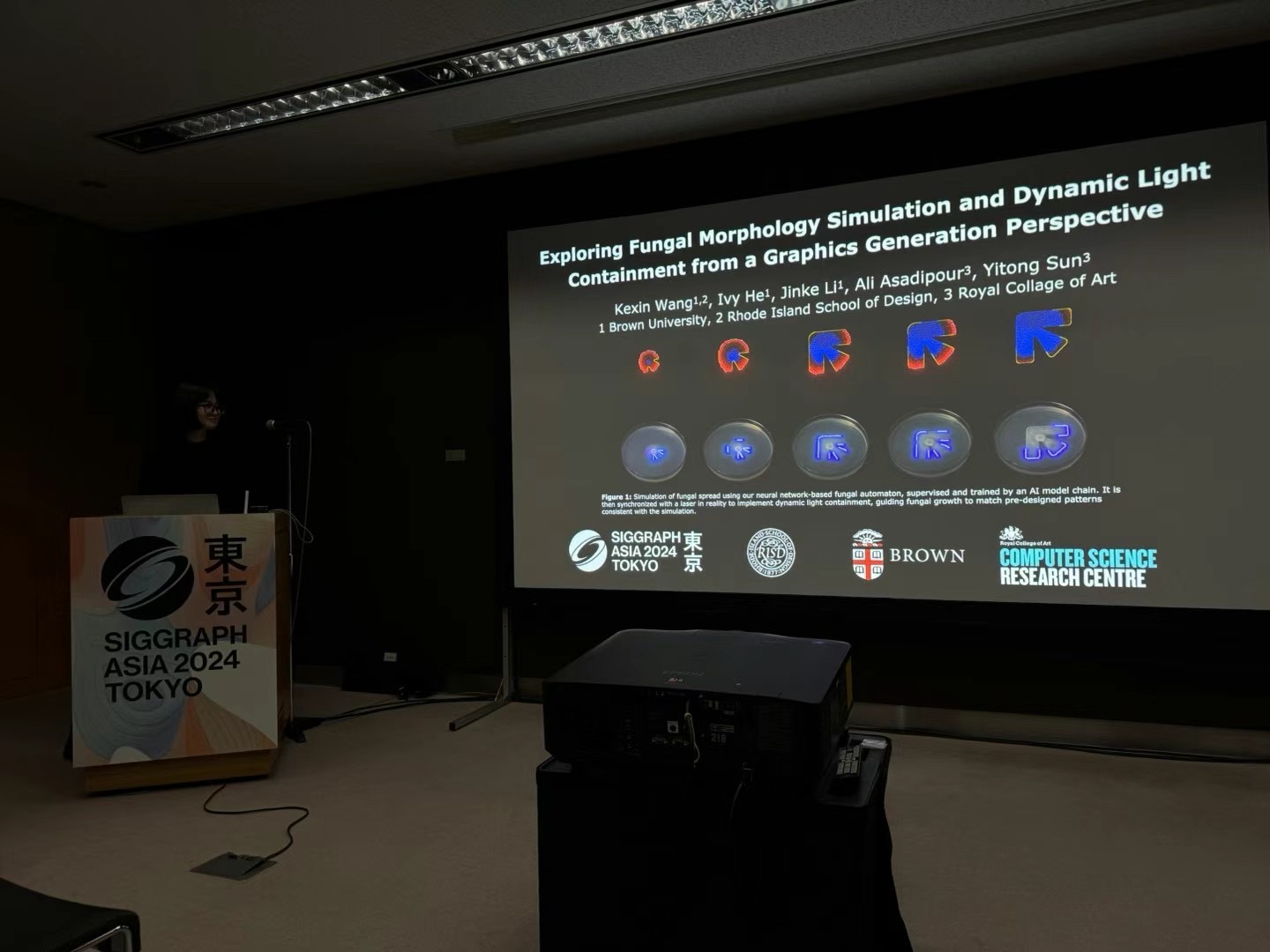
The project grew out of published research reframing fungal growth as a graphics-generation problem — treating morphology as a two-dimensional time-series to be learned, simulated, and then physically steered with light. It was developed across MIT CSAIL, Brown University, the Rhode Island School of Design, and the Royal College of Art, and first presented at SIGGRAPH Asia 2024. A follow-up, Biocompiler, extends the same light-guided method to living computation and was published at NeurIPS 2026 (Creative AI Track).