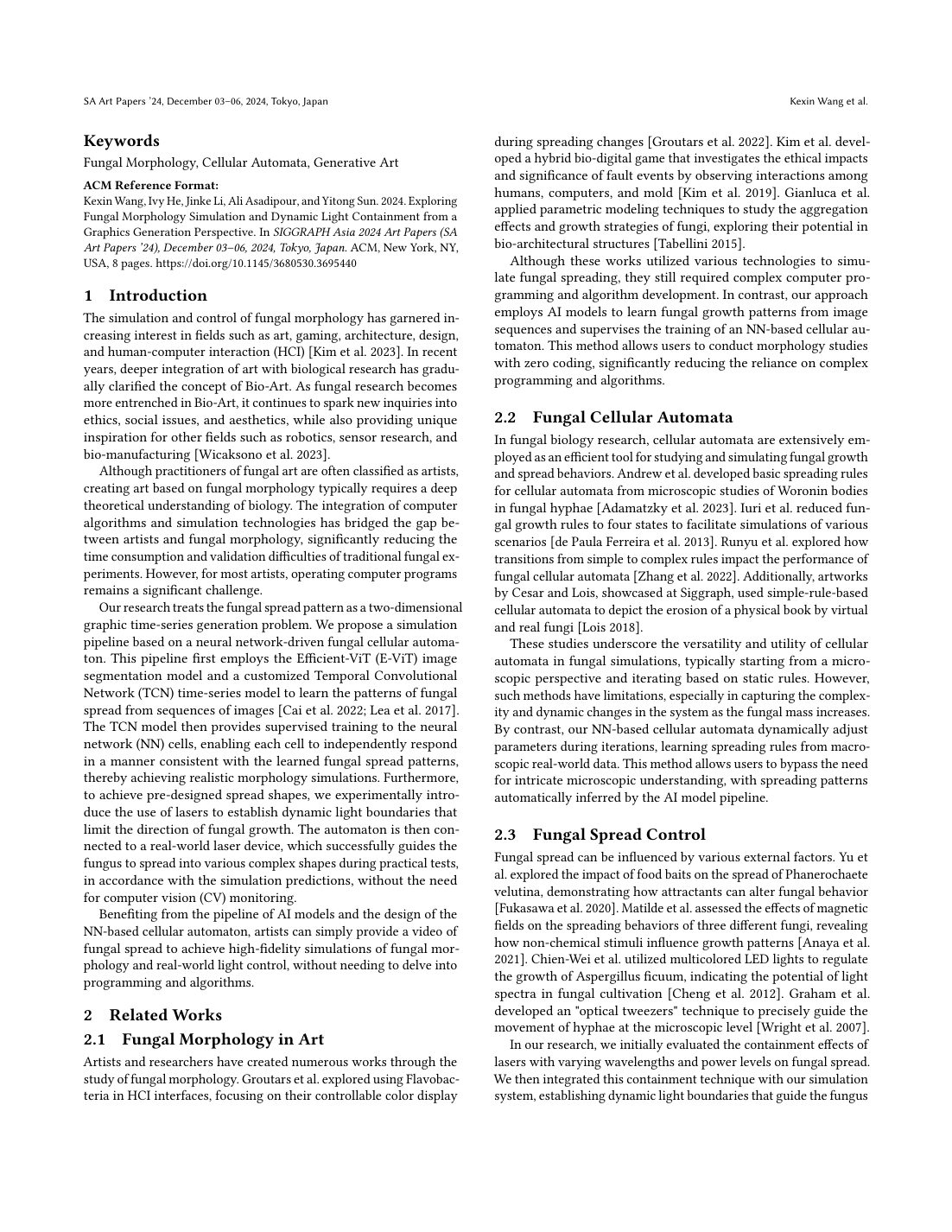
funguy.ai — the Mycelian Micro — is a direct adaptation of peer-reviewed work presented at SIGGRAPH Asia 2024. The kit takes a method that once needed lasers and machine-learning expertise and rebuilds it as something safe, visual, and hands-on.
Kexin Wang · Ivy He · Jinke Li · Ali Asadipour · Yitong Sun
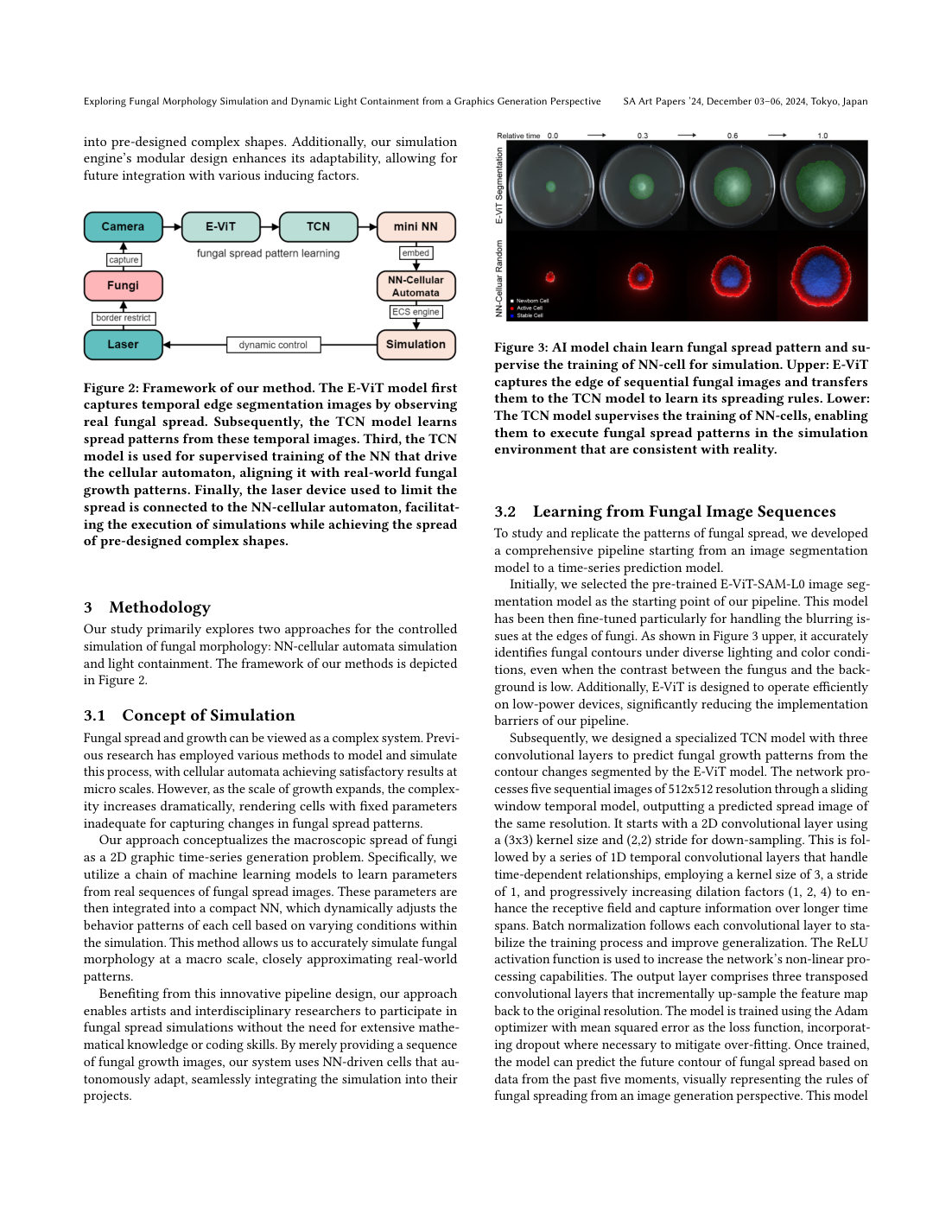
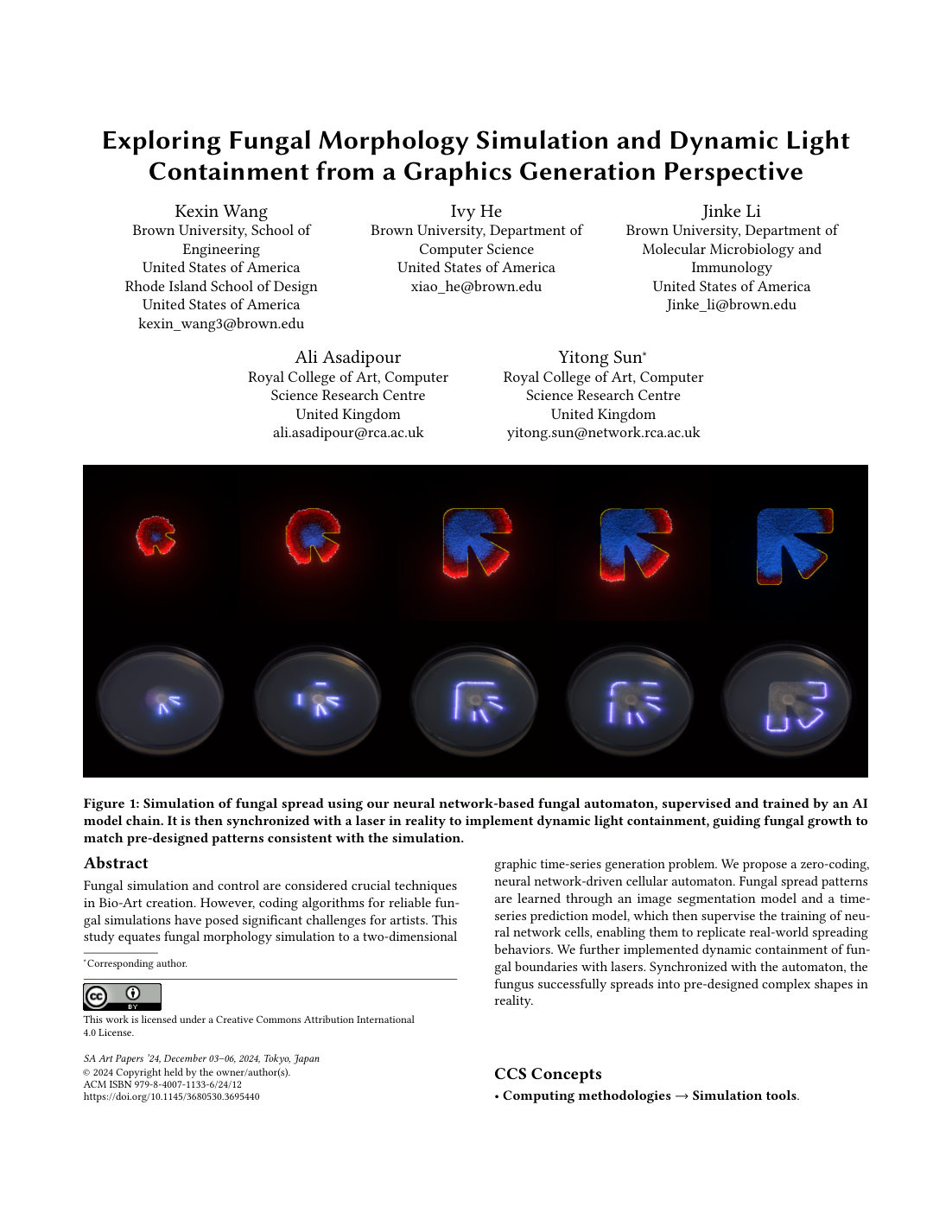
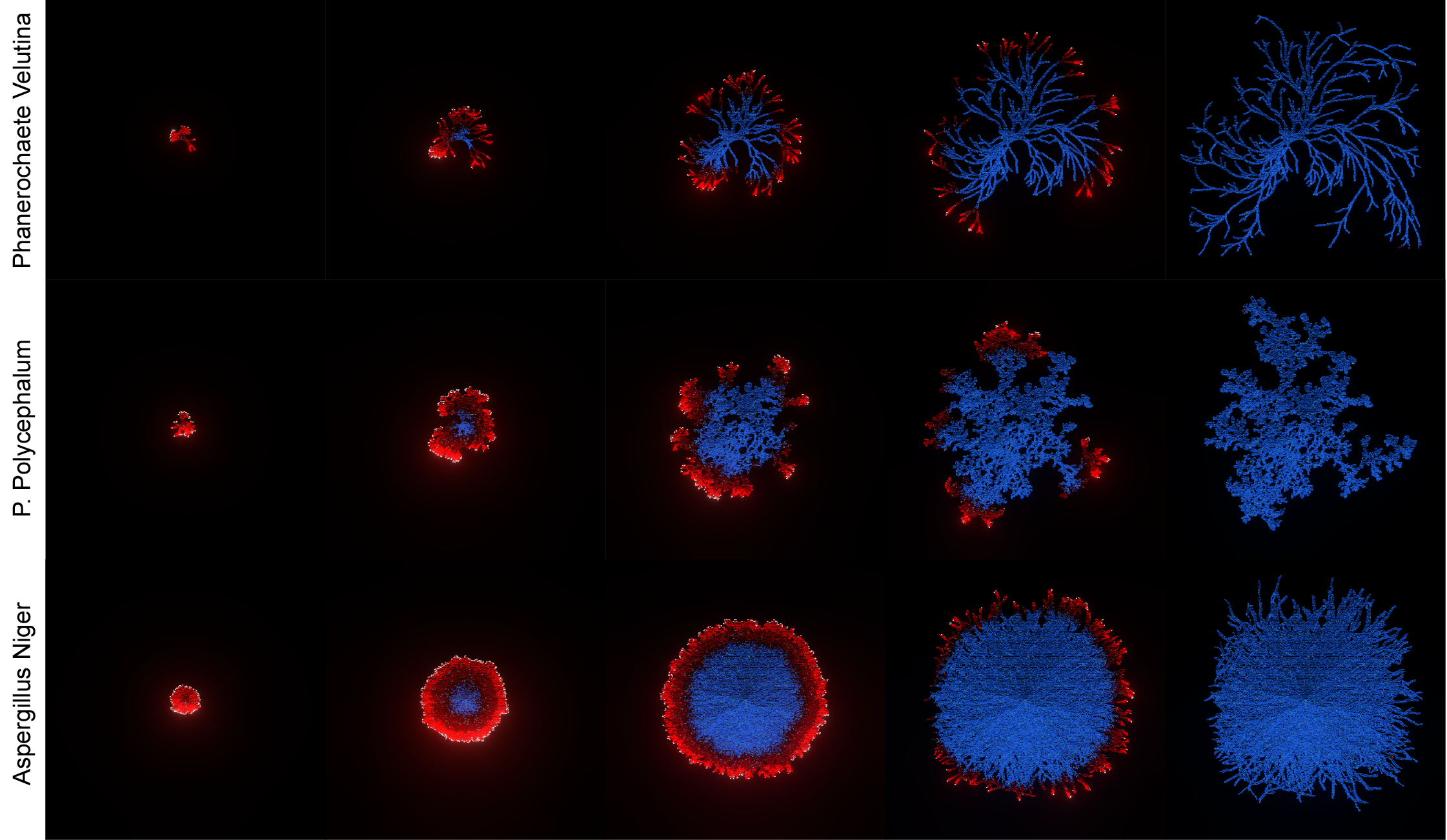
The paper reframes fungal morphology simulation as a two-dimensional graphic time-series generation problem and introduces a zero-coding, neural-network-driven cellular automaton. Fungal spread patterns are learned by an image-segmentation model and a time-series prediction model, which then supervise the training of the neural cellular automaton. The team further demonstrated dynamic containment of fungal boundaries using lasers, guiding real fungal growth into pre-designed complex shapes.
From biological observation to a trained neural automaton to dynamic light-guided growth — one continuous system.
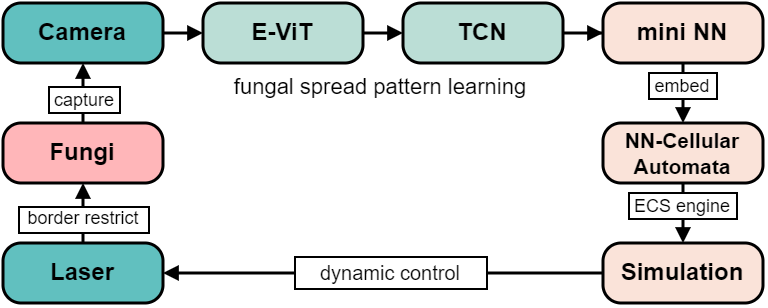
Here's the research in plain language — the same three ideas the kit lets you run by hand, with Mucor on agar.
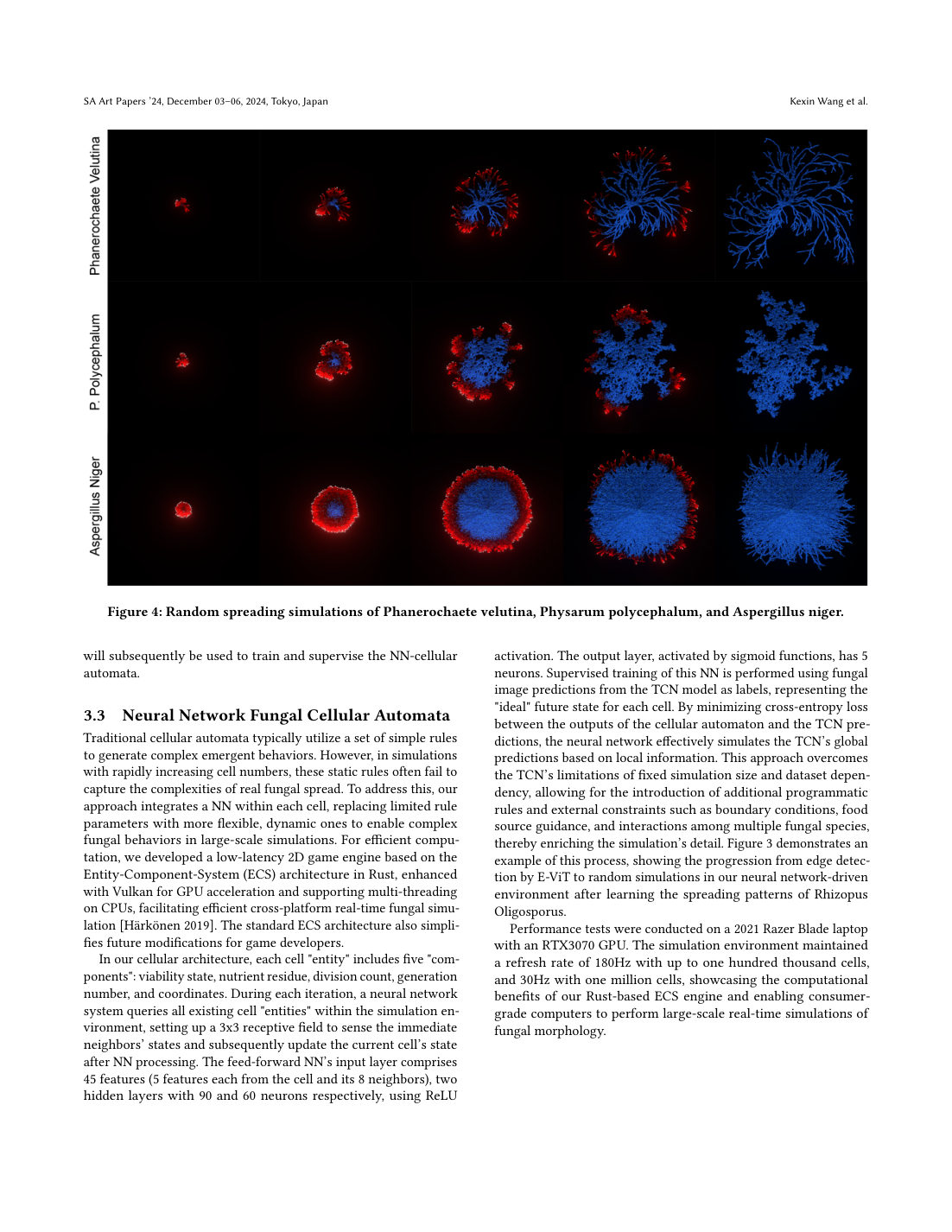
Time-lapse photos of real Mucor growth on agar are segmented frame by frame, so a model can see exactly where the organism is at each moment — tracking the branching white mycelial network across time.
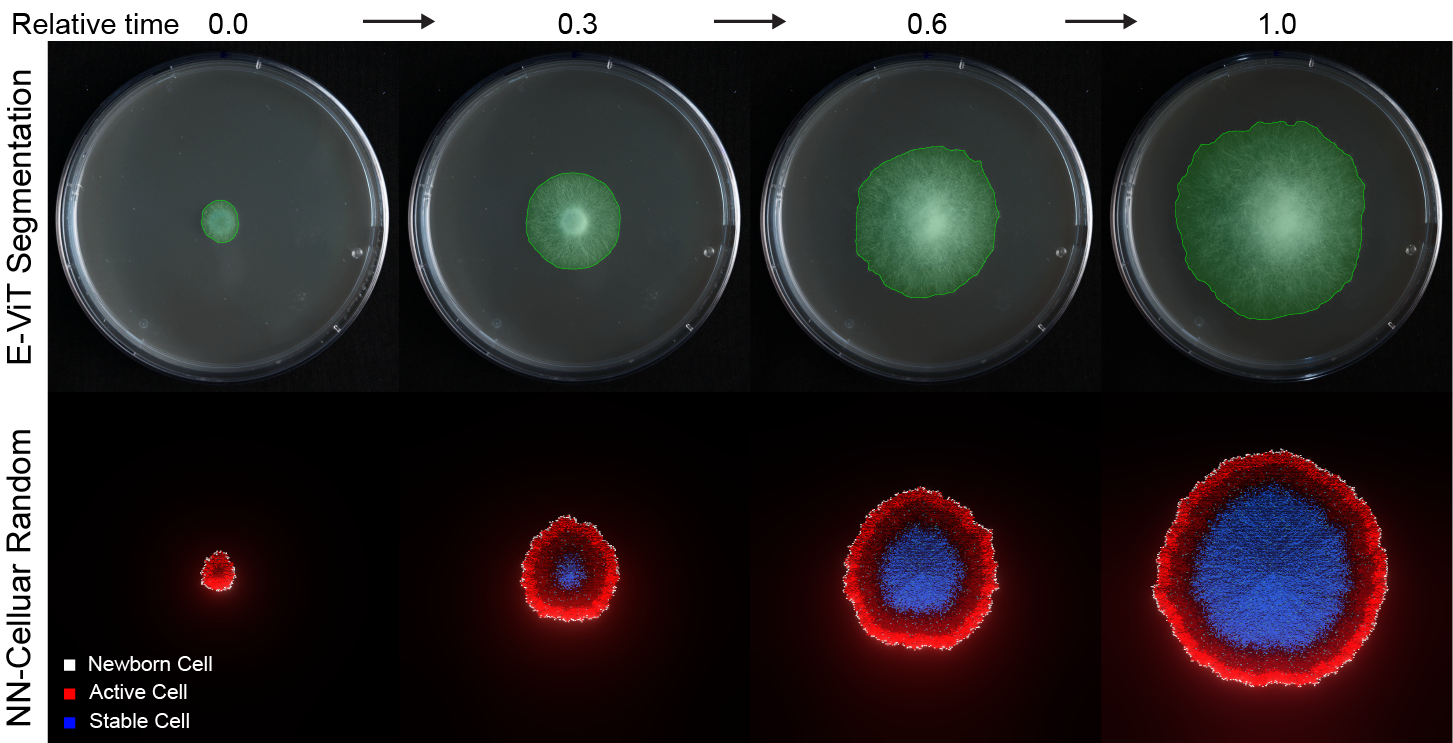
A time-series model predicts the next growth frame. That prediction supervises a neural cellular automaton — a grid of cells that learns local spreading rules to reproduce Mucor's morphology, no hand-coding required.
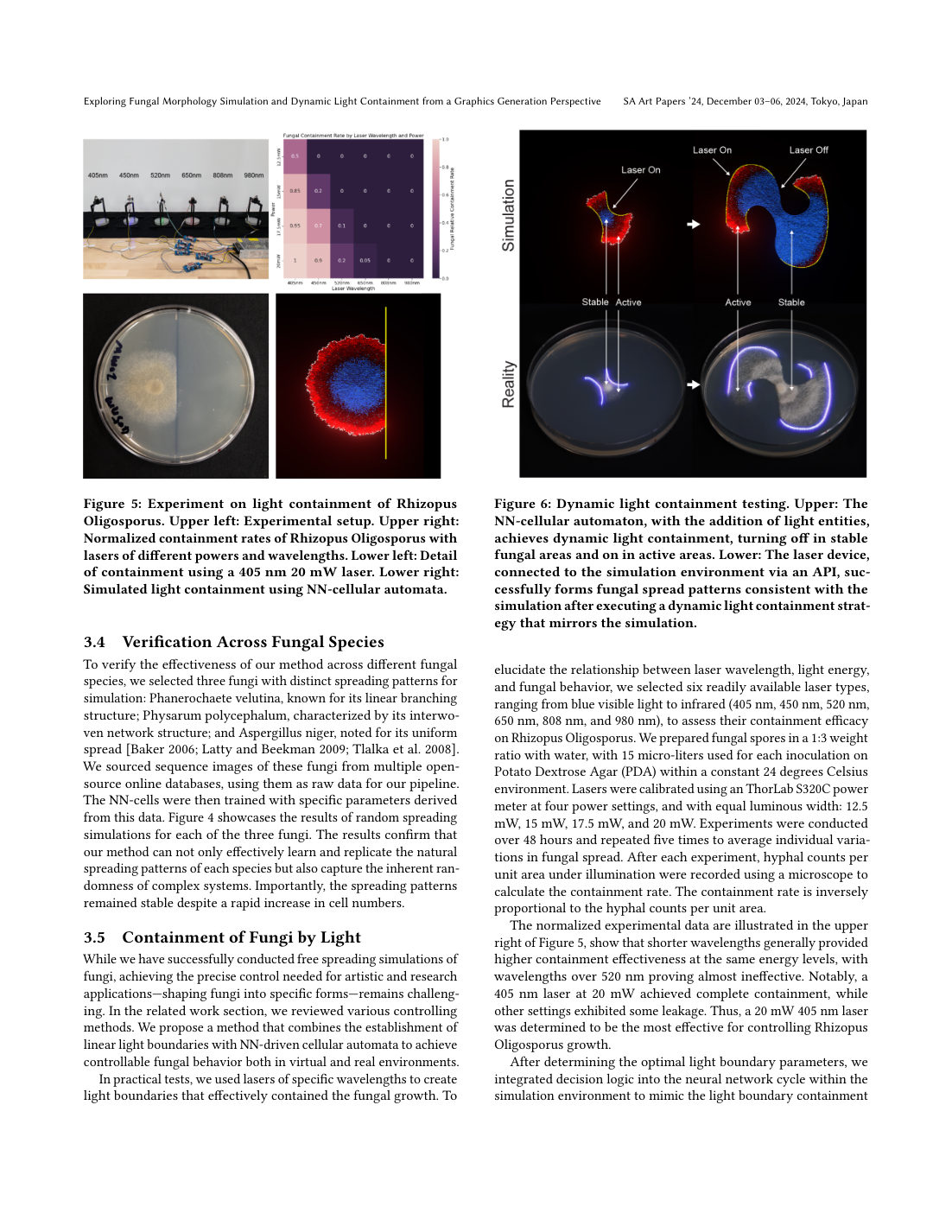
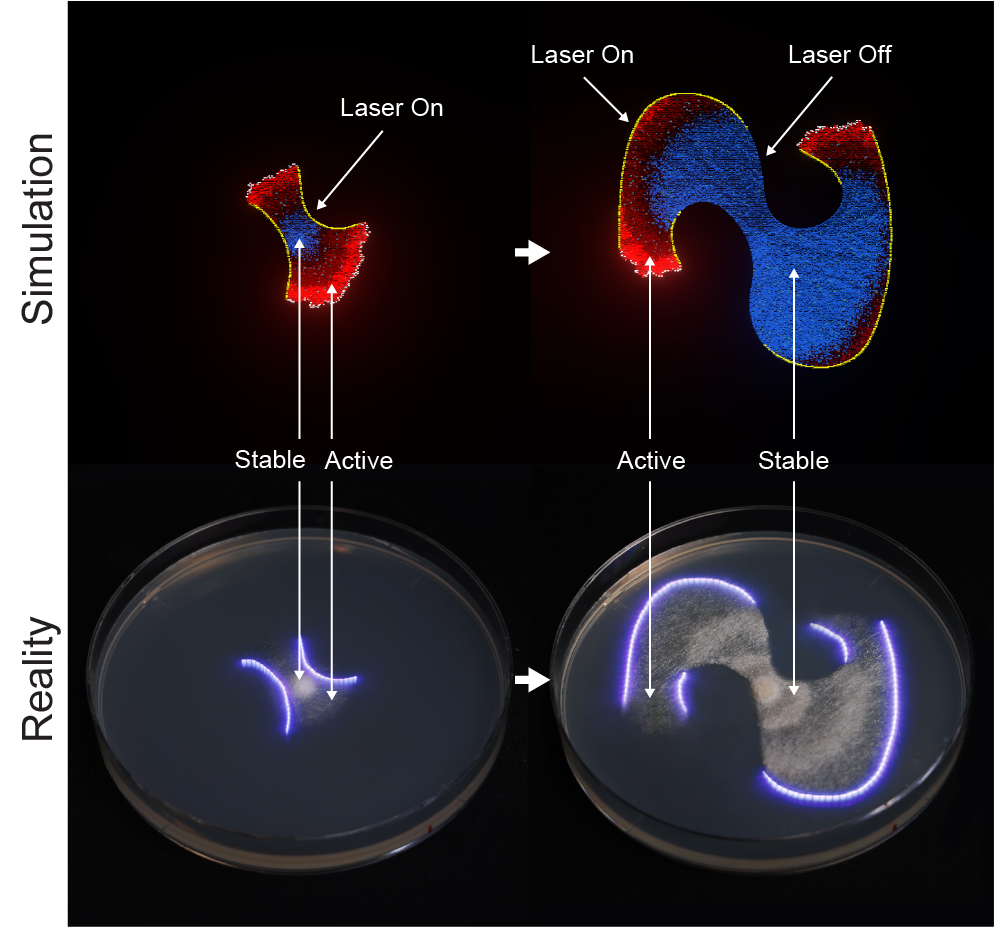
Mucor is strongly photophobic — it retreats from light at the cellular level. The system exploits this by scanning a low-power 405 nm laser continuously across the agar surface, tracing the boundary of a target shape. Wherever the beam lands, growth is inhibited; wherever it does not, the fungus is free to expand. Over hours, the mycelium fills every unlit region and stops cleanly at every lit edge — printing the design in living tissue, with no ink, no dye, and no physical contact.
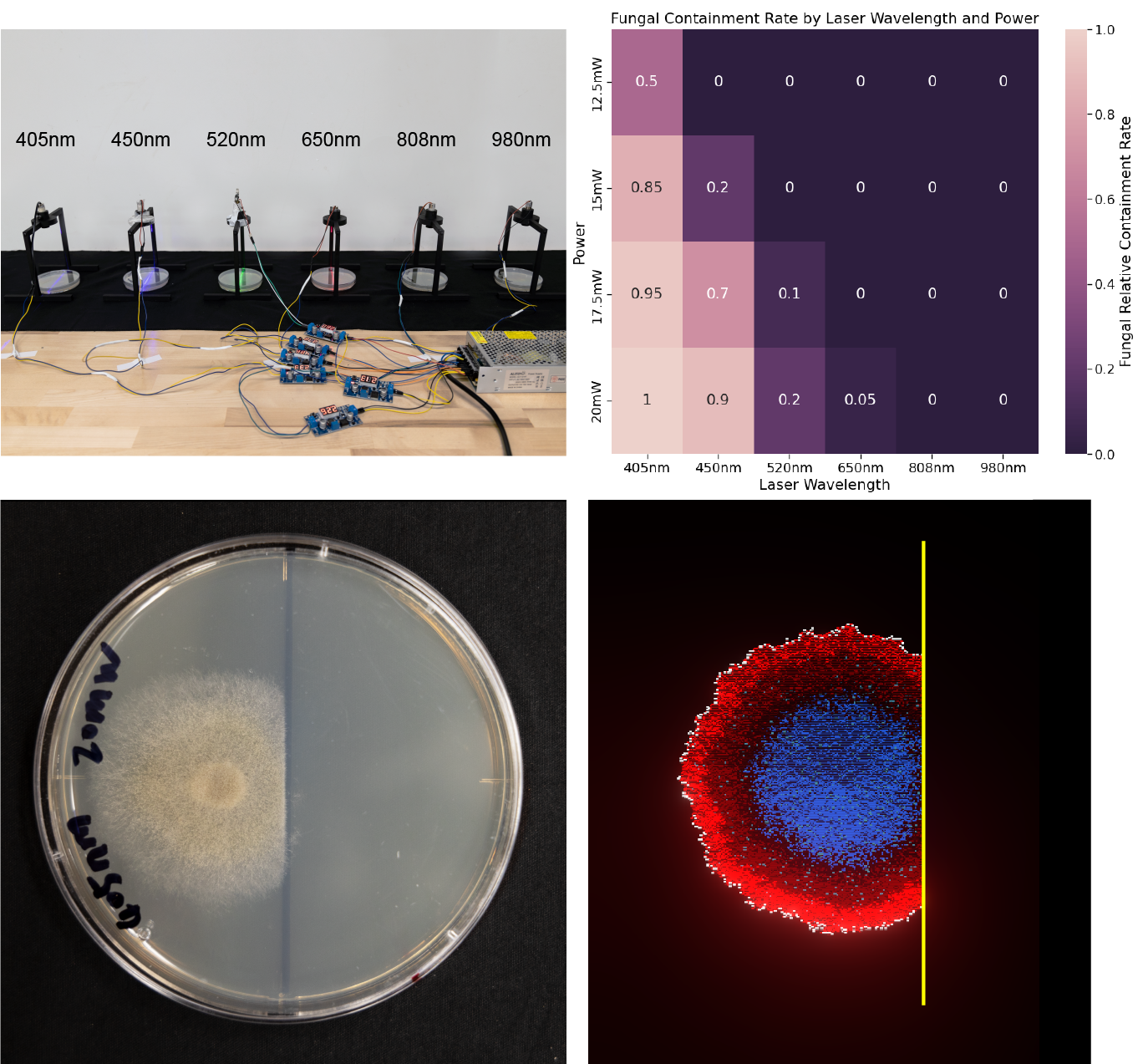
Before settling on 405 nm, the team tested inhibition across the visible spectrum. The result was unambiguous: violet light is uniquely effective on Mucor — and that efficiency is exactly what keeps the power low.
The key insight: 405 nm sits at the peak of Mucor's photoinhibition curve. At this wavelength, 20 mW creates a sharp, reliable containment boundary that no other visible wavelength achieves at comparable power. Green (532 nm) produces only a diffuse zone at the same power; red (650 nm) is largely ineffective. The kit stays well within Class 3B while producing precise, complex growth patterns — effectiveness and safety reinforce each other rather than trade off.
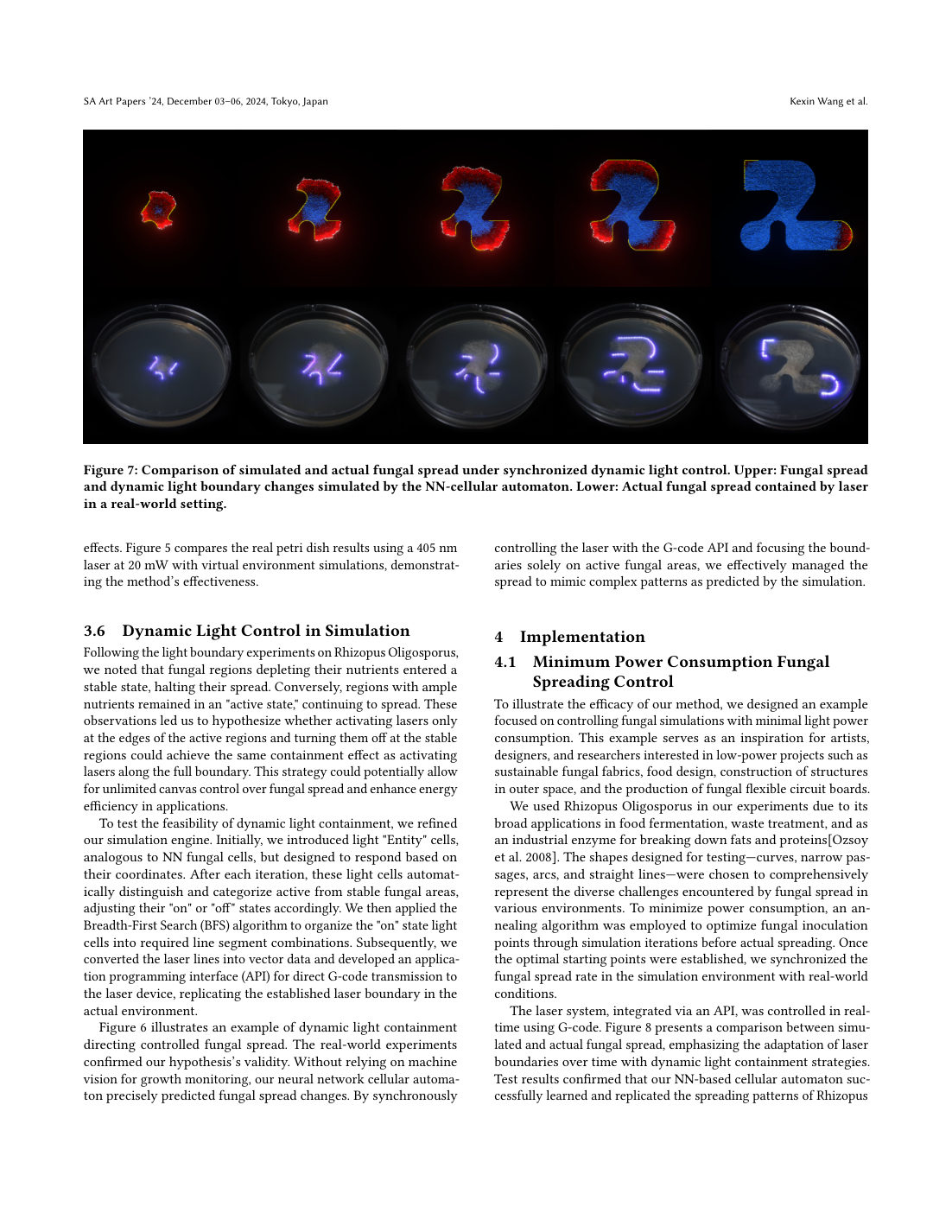
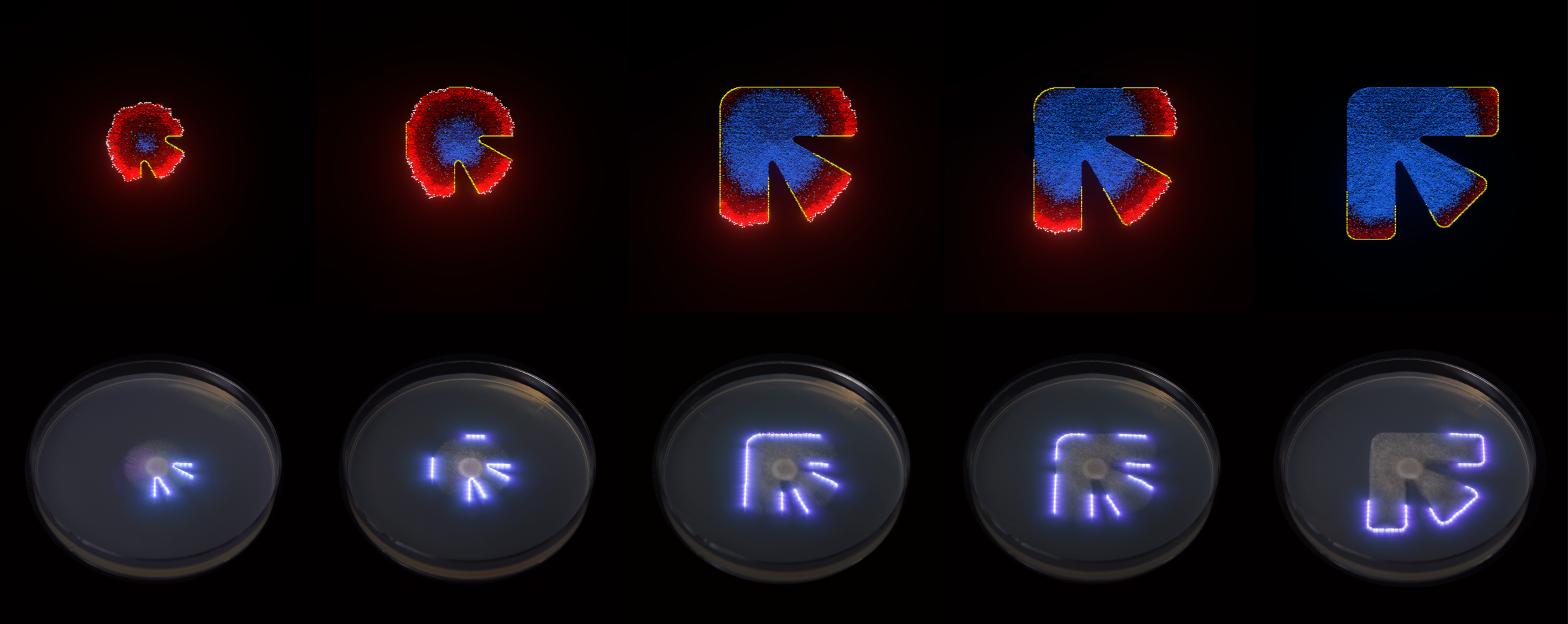
The system was validated across multiple target shapes, comparing NCA simulation against actual fungal growth outcomes.
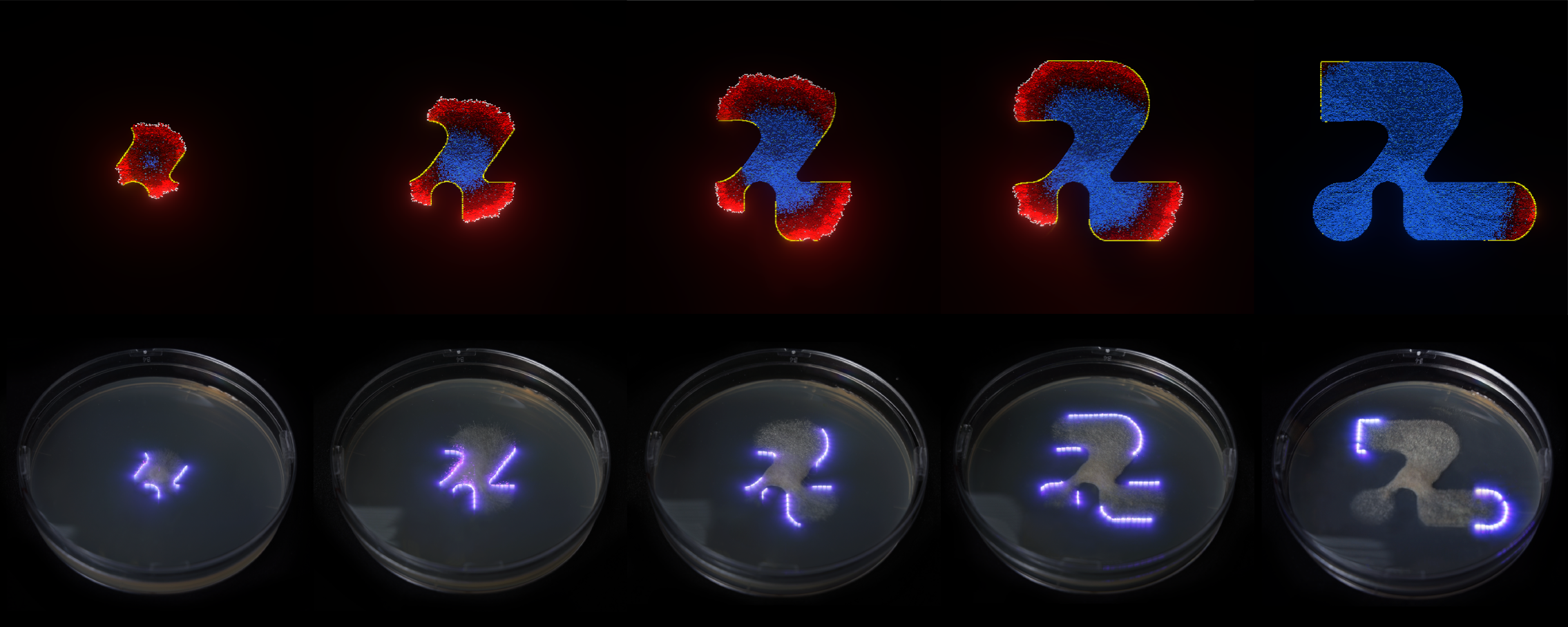
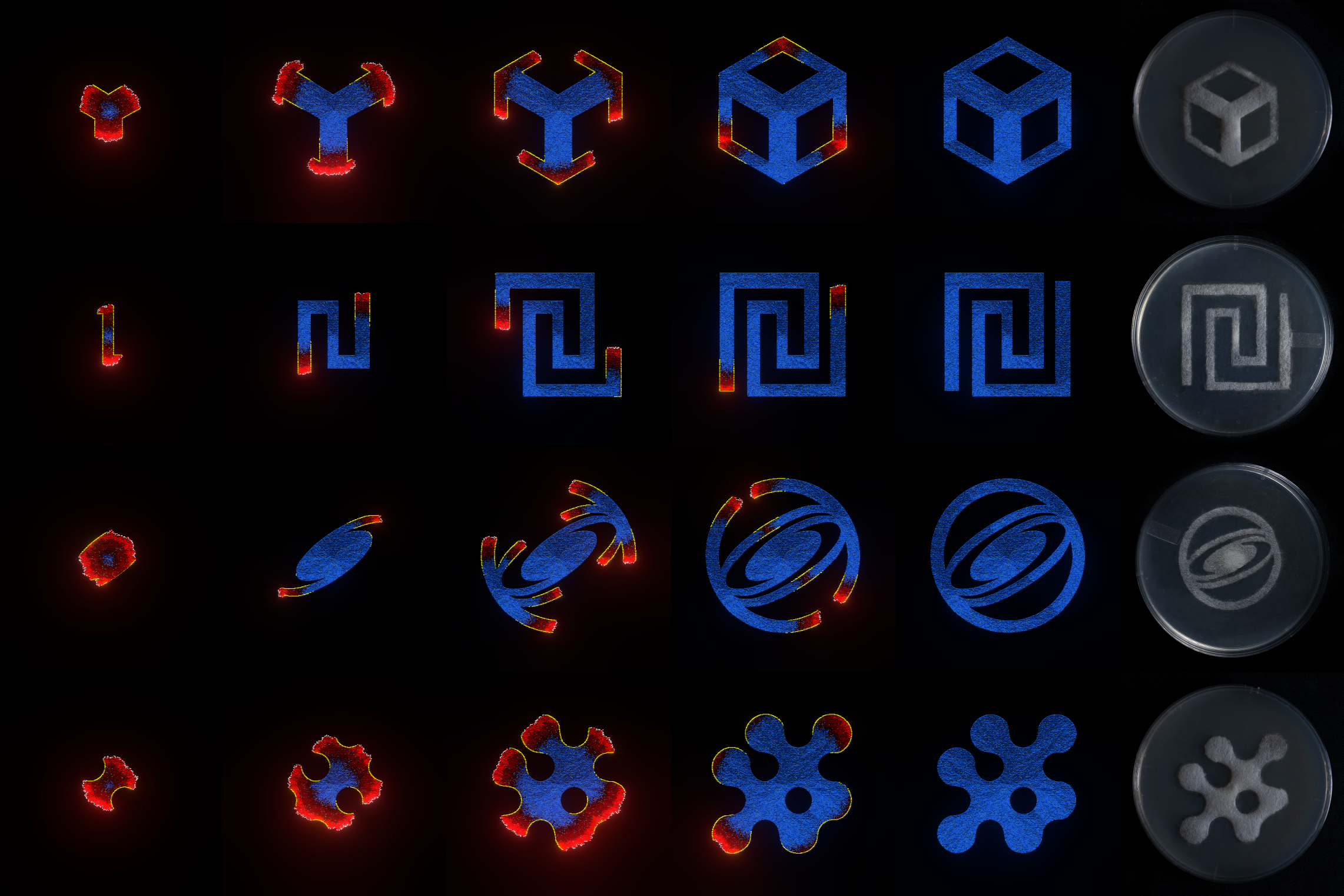
Neural cellular automata are one of the most intuitive windows into how modern AI learns: simple cells, local rules, patterns that emerge from training rather than instruction. Living networks like fungi and slime mold solve real problems — mazes, networks, resource allocation — with no brain at all.
Putting them side by side is more than a demo. It's a question researchers are actively exploring: what can artificial life and living systems teach each other? Mycelian Micro lets a teenager hold that question in their hands.
The original system was a research prototype — powerful, precise, and inaccessible. We redesigned every layer so that the core science is still intact, but anyone can run it, extend it, or build on top of it.
The bench rig becomes a self-contained, reusable unit that fits on a desk. Controlled humidity, temperature, and light — without a lab coat or a fume hood.
We selected non-pathogenic, food-grade Mucor strains that are easy to culture, safe to handle, and fully compostable at the end of a project.
The ML pipeline — segmentation, NCA training, laser path generation — becomes a single browser canvas. Draw a shape, run the simulation, grow it. The internals are exposed if you want to go deeper.
Schematics, firmware, and growth protocols are designed to be remixed. Add sensors, swap the light source, connect your own models — the kit is a starting point, not a ceiling.
Everything on this page becomes something you can do — start with the kit.
Pre-order Mycelian Micro →funguy.ai — the Mycelian Micro — is an independent educational product inspired by and adapting the cited research. Reference to the paper does not imply endorsement by SIGGRAPH, ACM, or co-authors not involved in the product.