
How to dye slime mold into color
Yes — you really can dye living slime mold. Because Physarum takes up pigment as it grows and feeds, food-safe dyes turn it into vivid, multi-color living art. Here's how it works and how to do it.
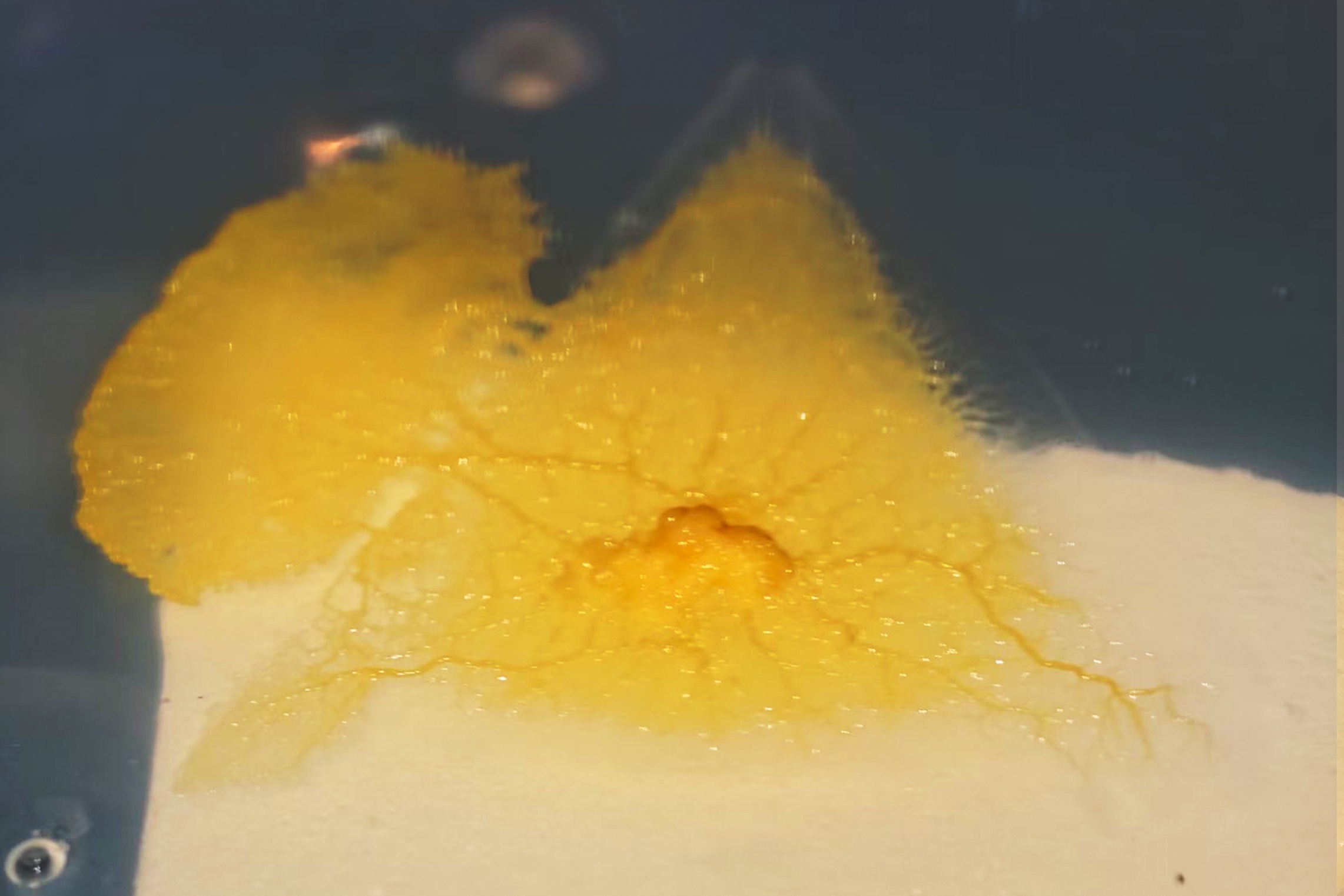
Can you dye slime mold?
Yes. Slime mold is a living, moving organism that constantly engulfs its surroundings as it grows. When you introduce a food-safe dye into its path — in the substrate or in colored food — the plasmodium takes up the pigment and becomes that color. Place several colors and one culture can grow through all of them, producing a multi-color, ever-shifting living pattern.
What you need
- A healthy, active culture — see how to grow slime mold first
- Food-safe dyes — gentle, non-toxic colorants (not harsh chemical stains)
- A damp substrate and a covered dish
- Plain oats to lead the slime mold where you want the color to go
The FunguyLab Slime Mold Kit comes with food-safe dyes matched to living Physarum, so you can skip the guesswork.
Step by step
1. Start with a thriving culture
Dyeing works best on an active plasmodium that's already spreading and feeding. Get it healthy first.
2. Introduce the dye
Add food-safe dye to the substrate, or dye a food source (like an oat) and place it in the slime mold's path. As the plasmodium flows through and feeds, it draws the color into its network.
3. Place multiple colors
Put different colors at different points around the dish. The single organism grows toward each, carrying the colors along its veins — that's how you get a multi-color living pattern.
4. Capture it
The colored network keeps moving and changing while it's alive, so photograph or film it. A time-lapse of dyed slime mold spreading is genuinely striking.
Tips
- Use modest amounts of dye — the goal is color, not to flood the organism.
- Guide direction with oat placement so colors meet where you want.
- Keep it covered, warm, and dim between color applications.
Is it safe?
With food-safe dyes in normal amounts, the slime mold keeps growing while it colors. Physarum itself is non-pathogenic and school-safe. Wash hands after handling and keep the culture covered. Recommended for ages 10+.
Everything you need to dye living color.
The FunguyLab Slime Mold Kit includes a live Physarum culture and the food-safe dyes to color it — $39, open-the-box.
Get the Slime Mold Kit →More guides: How to grow slime mold (beginner's guide) · Slime mold vs. fungi — what's the difference?