
How to grow slime mold (Physarum) — a beginner's guide
Slime mold is one of the most rewarding living things you can grow at home. It's fast, forgiving, and mesmerizing to watch. Here's everything a beginner needs to grow Physarum polycephalum — from waking a culture to feeding, temperature, and care.
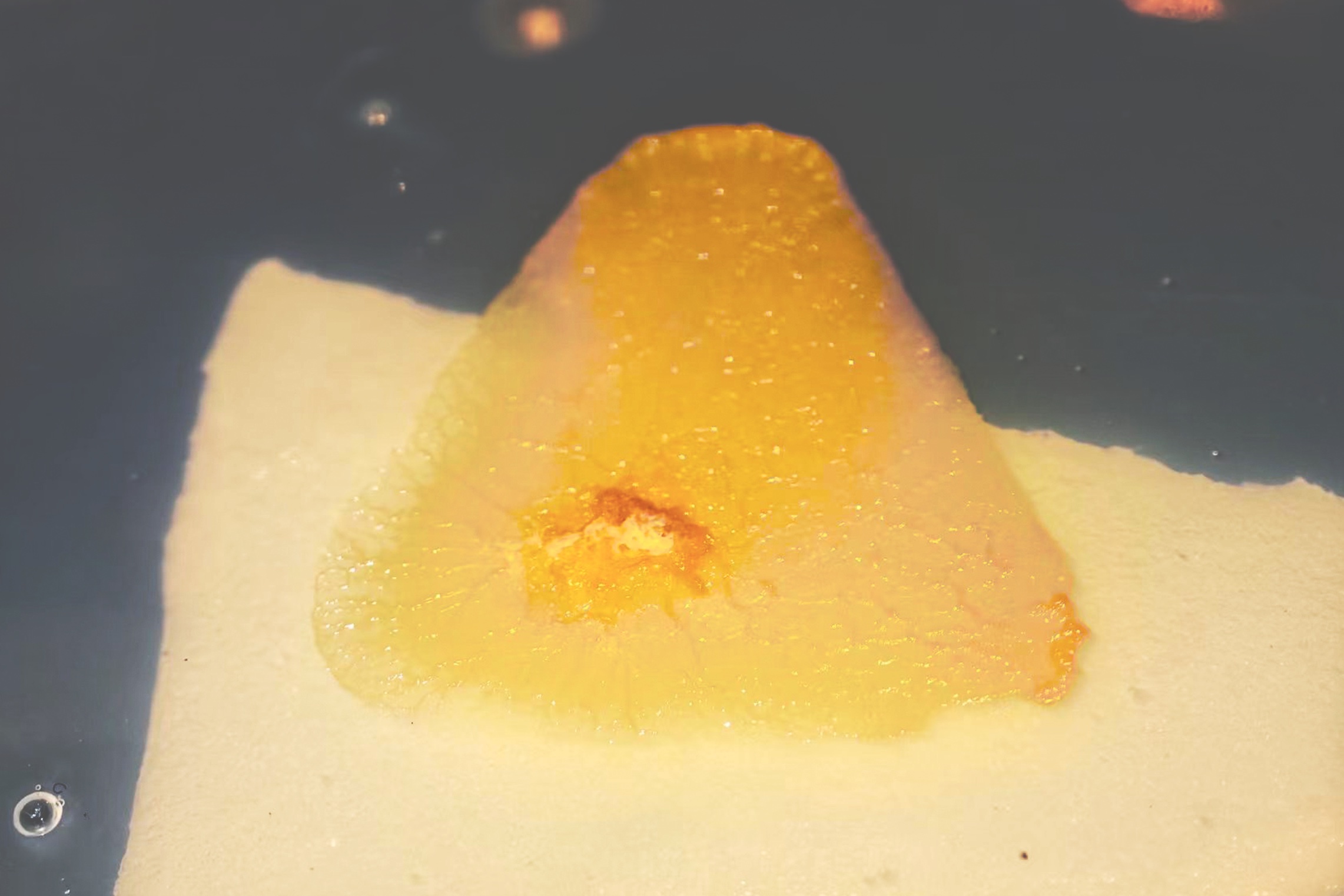
What is slime mold?
Slime mold isn't a plant, an animal, or a fungus. Physarum polycephalum is a protist — a brainless, single-celled organism (a "plasmodium") that creeps, pulses, and explores its surroundings, famously solving mazes and finding the shortest path to food without a nervous system. That behavior is exactly what makes it so fun to grow.
What you'll need
- A live culture of Physarum (or a dormant sclerotium to wake up)
- A covered dish — a petri dish or any clean container with a lid
- Plain rolled oats — the classic slime-mold food
- A damp substrate — moist paper towel or non-nutrient agar
- A warm, dim spot — room temperature, out of direct light
Our Slime Dyeing Kit includes a live culture, substrate, and everything below in one box — plus food-safe dyes to color it.
Step by step
1. Wake the culture
Place the live culture (or dormant sclerotium) on a damp paper towel or agar in your covered dish. Within a few hours it rehydrates and the bright yellow plasmodium begins to move.
2. Feed it
Set a few plain rolled oats near the plasmodium. Physarum flows toward food and engulfs it. Add fresh oats daily and remove old, softened ones so competing mold doesn't take hold.
3. Keep it warm & humid
Hold it at room temperature (about 20–25 °C / 68–77 °F) in a covered container with a little moisture. Keep it out of direct light — Physarum prefers dark, damp places and will move away from bright light.
4. Watch (and guide) it grow
The plasmodium spreads as a glowing network within hours. You can guide its path by where you place oats, and photograph the ever-changing pattern. Want color? See how to dye slime mold.
Care & troubleshooting
- Not moving? Usually too dry or too cold — add moisture, warm it up, add a fresh oat, cover, dim the light.
- Fuzzy contamination? Remove old food promptly; transfer the clean growing edge to a fresh damp dish.
- Going dormant (hard crust)? That's a sclerotium — normal when it dries out. Re-wet it and it revives.
Is growing slime mold safe?
Yes. Physarum polycephalum is non-pathogenic and widely used in schools and labs for biology, computing, and art. It is not a fungus and isn't harmful to healthy people or pets with normal handling — just wash your hands after contact and keep the culture covered. Recommended for ages 10+.
Want a ready-to-grow kit?
The FunguyLab Slime Mold Kit gives you a live Physarum culture, food-safe dyes, substrate, and tools — grow and dye living color, straight out of the box. $39.
Get the Slime Mold Kit →More guides: How to dye slime mold into color · Slime mold vs. fungi — what's the difference?